The Johns Hopkins University Whiting School of Engineering (WSE) and APL have selected three winning proposals for the third cycle of the SURPASS initiative. The proposals were chosen for their potential to transform foundational research into impact. Each proposal is led by two principal investigators (PIs), one from APL and the other from WSE.
APL and WSE launched SURPASS in 2022, with the goal of combining each institution’s unique technical strengths and research and development communities. The initiative supports cross-divisional teams that take innovative, multidisciplinary approaches to solving some of the world’s most pressing problems.
SURPASS received 31 whitepaper submissions, five of which were chosen as finalists. The three winning proposals have the potential to transition into larger research efforts that exceed $100 million in external funding.
Read more about the winning proposals below:
- AI-Driven Discovery of High-Entropy H2 Generators (ADD-H2)
Hydrogen is the flagship zero‑emission energy carrier for a post‑fossil world, yet its clean generation is a major bottleneck. The team behind ADD‑H2 tackles this by developing a high‑entropy‑material reactor that thermochemically splits abundant water using heat, offering a scalable pathway to sustainable hydrogen.
-
- PIs: Avi Bregman (APL) and Corey Oses (WSE)
- Contributing APL staff members: Leslie Hamilton (PM), Kenneth Kane, and Karun Kumar Rao
- Contributing WSE faculty: Anthony Hall
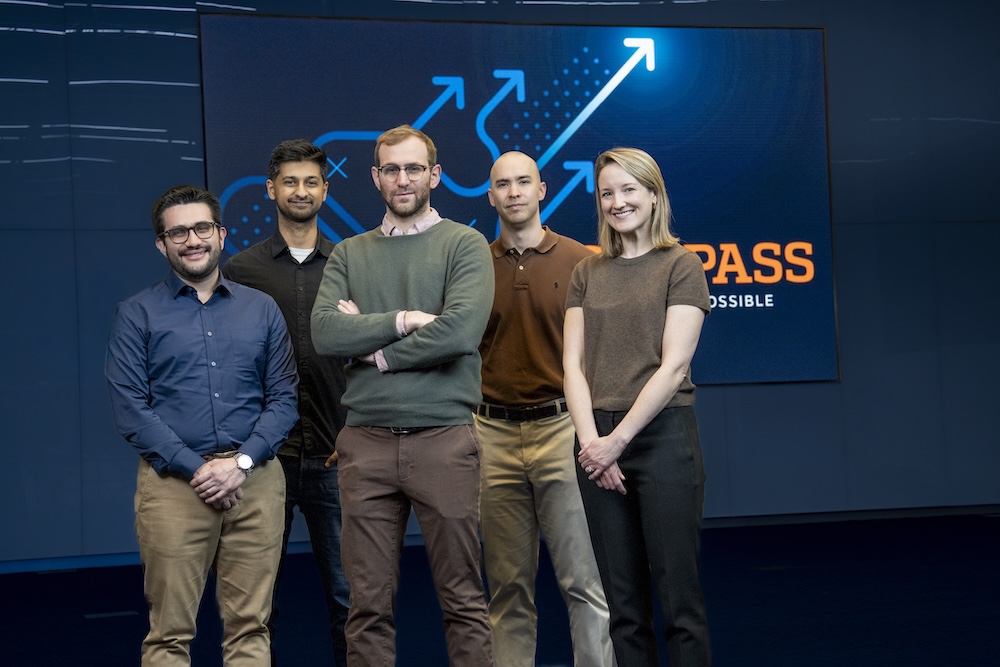
The AI-Driven Discovery of High-Entropy H2 Generators (ADD-H2) team, from left: Co-PI Corey Oses (WSE), Karun Kumar Rao (APL), Co-PI Avi Bregman (APL), Kenneth Kane (APL), and PM Leslie Hamilton (APL). Not pictured: Anthony Hall (WSE). (Credit: Johns Hopkins APL/Craig Weiman)
- Autonomous Robotic Surgery for Xenotransplantation at Scale
Approximately 100,000 Americans sit on national transplant waiting lists in need of kidney transplants, a shortage that gene‑edited pig kidneys (xenotransplantation) could resolve. This team will create the first Level‑5 autonomous robot for pig kidney procurement, unlocking a multibillion‑dollar solution to the organ‑supply crisis and paving the way for future automated human surgeries.
-
- PIs: Corban Rivera (APL) and Mathias Unberath (WSE)
- Contributing APL staff members: David Patrone (PM), Seth Billings, and Nathanael Kuo
- Contributing WSE faculty: Axel Krieger, Andrew Cameron, and Jeffrey Jopling
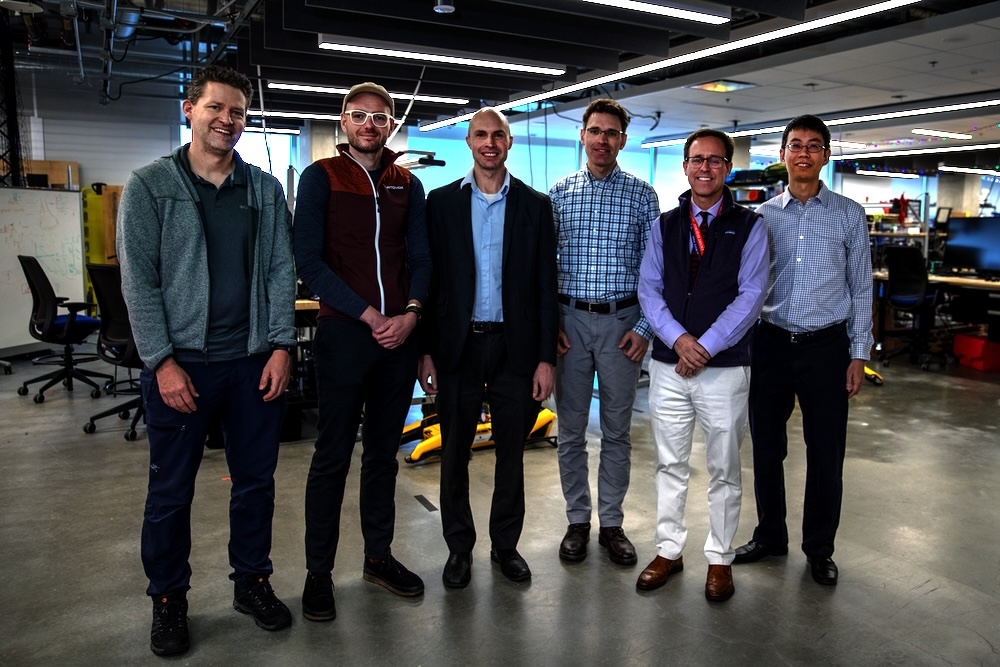
The Autonomous Robotic Surgery for Xenotransplantation at Scale team, from left: Alex Krieger (WSE), Mathias Unberath (Co-PI, WSE), Corban Rivera (Co-PI, APL), Seth Billings (APL), Andrew Cameron (SOM), and Nathanael Kuo (APL). Not pictured: Jeffrey Jopling (SOM), PM Mike Wolmetz (APL), Grayson Byrd (APL), and APM Gautam Vallabha (APL). (Credit: Johns Hopkins APL/Ed Whitman)
- SPARROW: Scalable Platform for Agile Response into very lOW orbit
Very low Earth orbit (vLEO) is an emerging space domain with outstanding communication, science, and reconnaissance benefits, but has been difficult to operationalize. The SPARROW team will develop a standardized, modular spacecraft bus with a rapid‑launch dispenser to give low‑cost, short‑duration (under 1 year) access to vLEO, supporting scientific, commercial, and defense applications on accelerated timelines.
-
- PIs: Kinga Wrobel (APL) and Jaafar El-Awady (WSE)
- Contributing APL staff members: Matthew Zuber (PM), Ben Estacio, Kenneth Kane, and Astrid Raisanen
- Contributing WSE faculty: Tamer Zaki and Joseph Katz
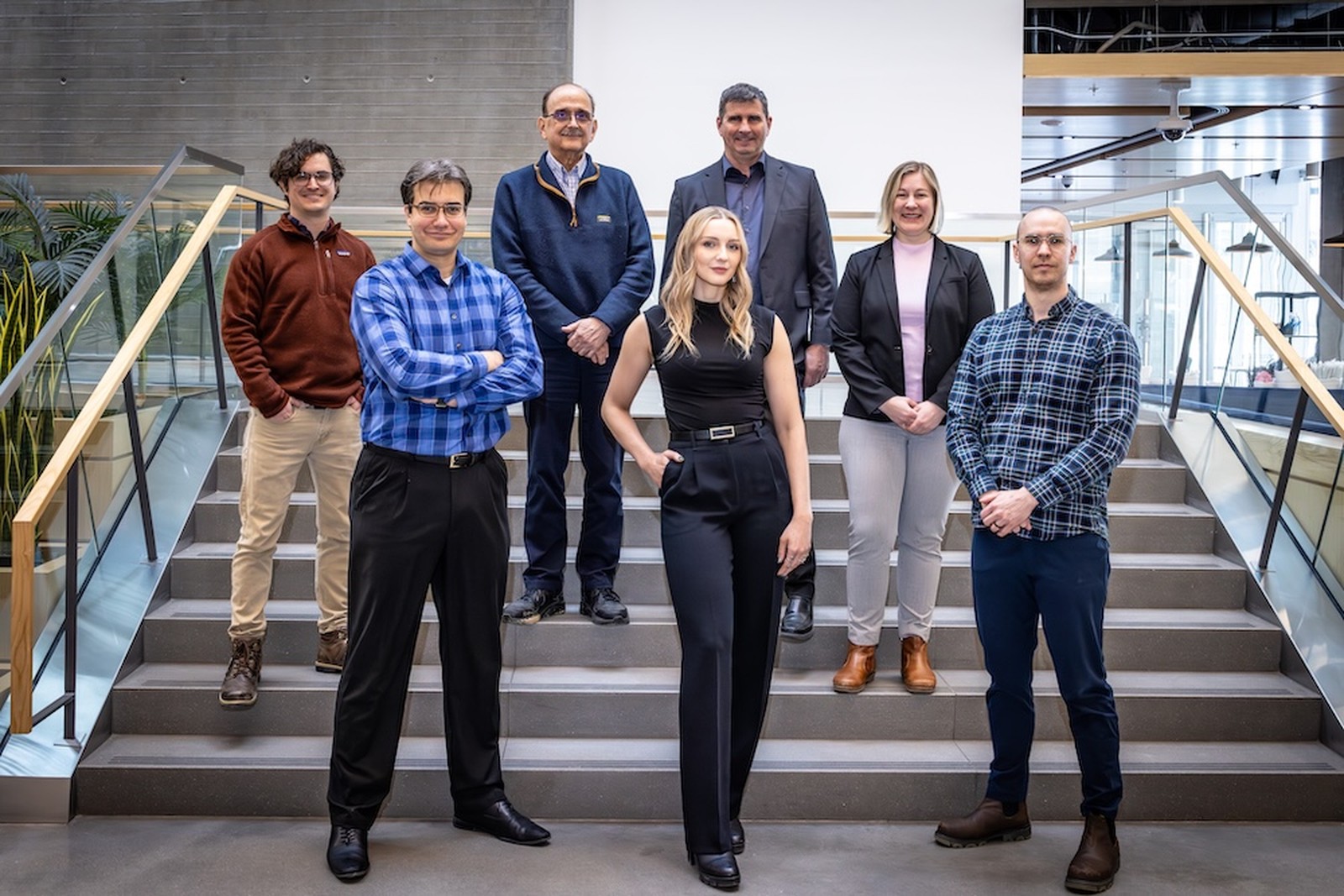
The SPARROW Team: Enabling Flight in Very Low-earth Orbit, from left: Ben Estacio (APL), Co-PI Jaafar El-Awady (WSE), Joe Katz (WSE), Co-PI Kinga Wrobel (APL), PM Matthew Zuber (former APL), Astrid Raisanen (APL), and Kenneth Kane (APL). Not pictured: Tamer Zaki (WSE). (Credit: Johns Hopkins APL/Ed Whitman)
Learn more about SURPASS.
